12th Annual International Film Festival of Archive, Memory, Ethnography


The newly renovated Batalha Centro de Cinema in the city centre of Porto, Portugal.


I was invited as a guest filmmaker to participate in the 12th Annual International Film Festival of Archive, Memory, Ethnography (17-21 October, Porto, Portugal). The festival presented a program of four of my experimental film shorts in addition to a master class on the work. The screenings and master class took place in the newly renovated Batalha Centro de Cinema in the city centre. [Festival website and program pdf.] I also took part in a panel of authors who contributed to a new book, entitled Aesthetic Authenticity in Cinema, a volume of essays dedicated to a nearly tabooed subject today within the field of film scholarship.

Panel/round table discussion of new book release (five of ten authors)

From the master class: endeavoring to talk about the superimposition of two vanishing points

Impromptu polaroid portrait
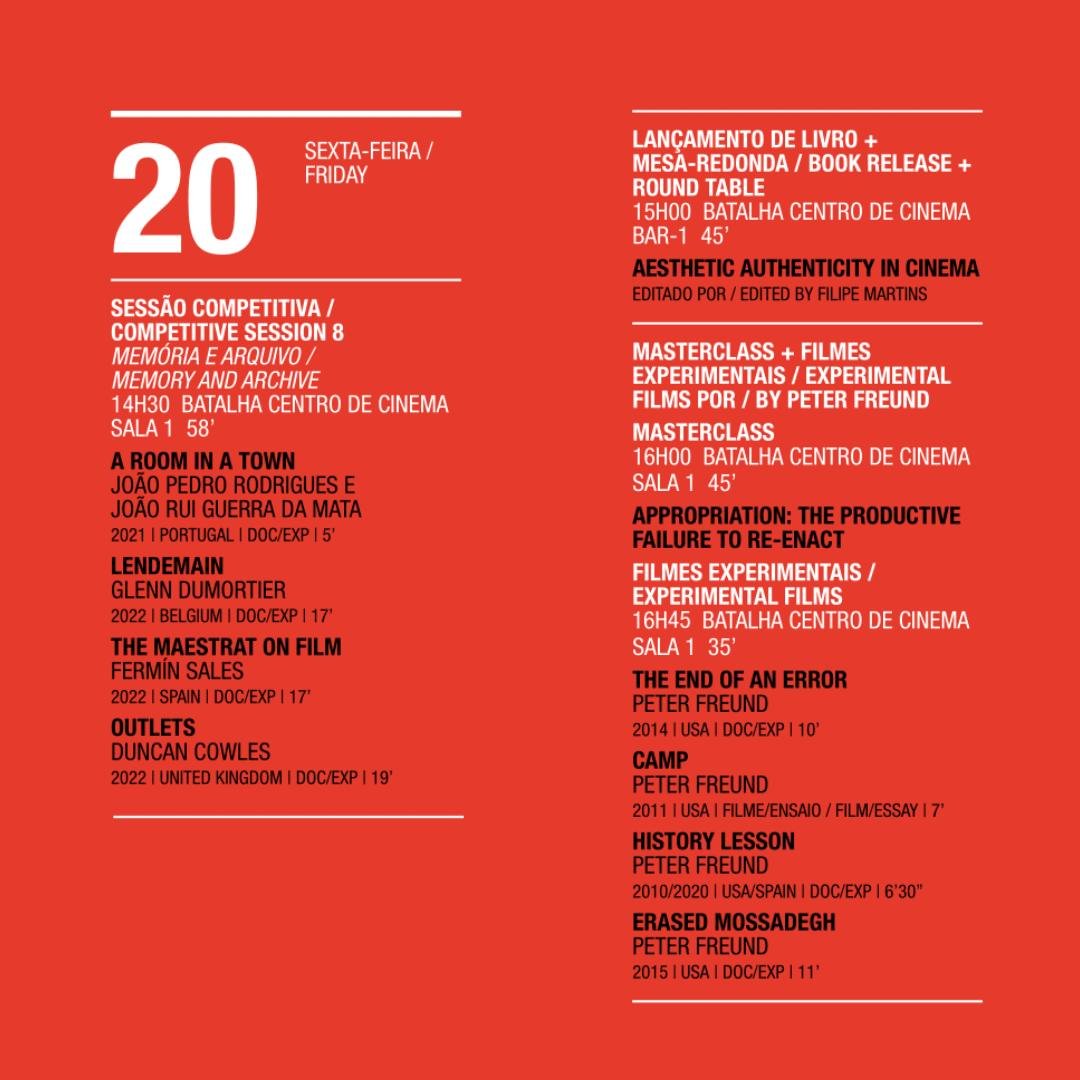
Print program page

GLIMPSES OF FESTIVAL IN GENERAL:

A video installation

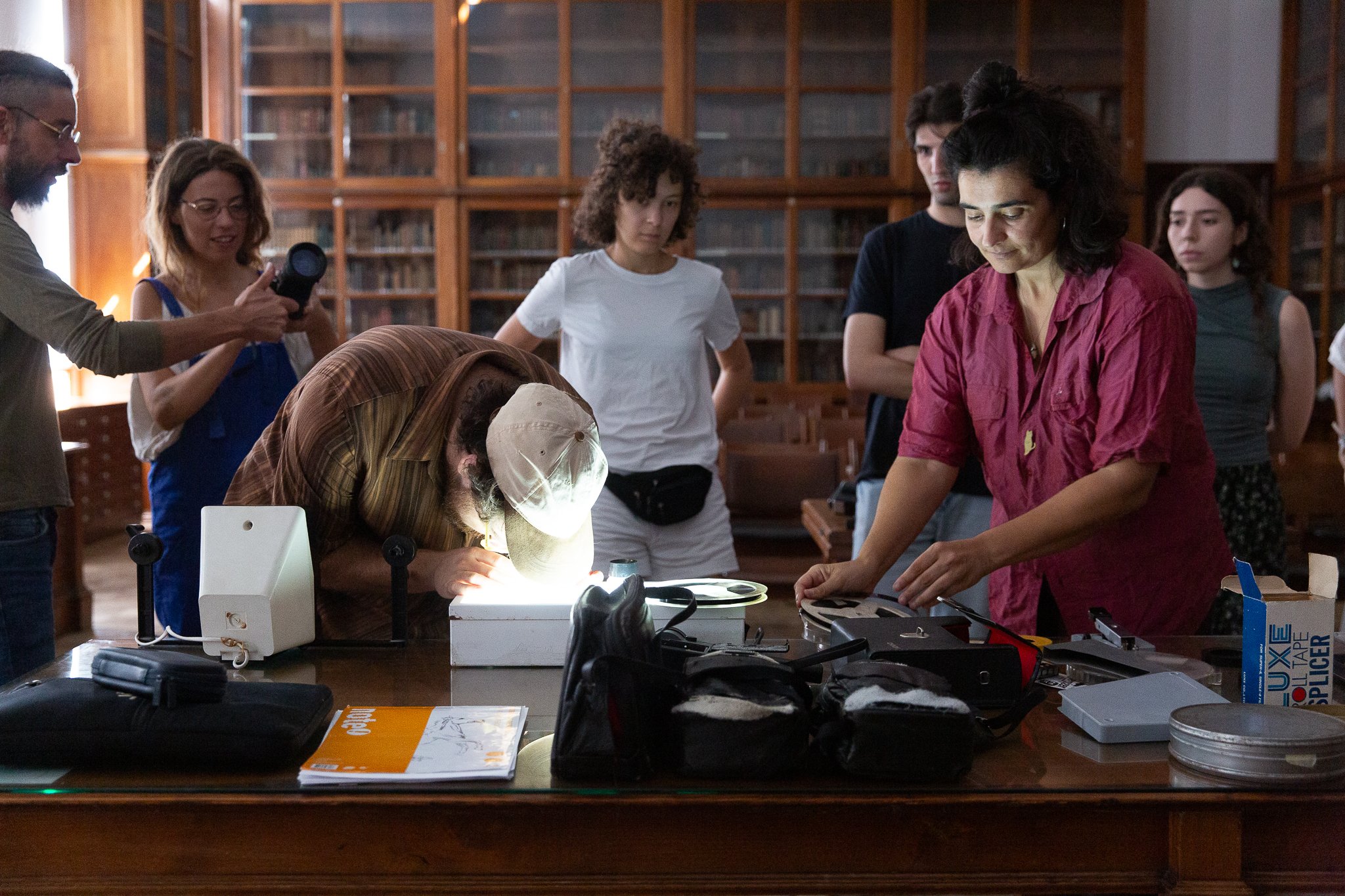
Among the festival workshops
One performance work in the festival

Festival poster on exterior of Batalha Centro de Cinema

Refreshments between screenings and performances

Né Barros and Filipe Martins, Festival Directors

Featured filmmaker, Naomi Kawase, and her curator, Lucio Barisone, flanked by Né Barros and Filipe Martins, Festival Directors

Chapter contribution to new book on authenticity in cinema


Later this month, I will publish a chapter in this new volume, Aesthetic Authenticity in Cinema, edited by Filipe Martins.

Contributors include:
DAVID LAROCCA
FILIPE MARTINS
SUSANA NASCIMENTO DUARTE
PETER FREUND
PAULA RABINOWITZ
SÉRGIO DIAS BRANCO
MARIA AUGUSTA BABO
FERNANDO JOSÉ PEREIRA
HUMBERTO MARTINS
CHRISTA BLUMLINGER

The book release with coincide with the Archive, Memory, Ethnography International Film Festival in Porto, Portugal, October 17-21. This year’s festival will screen a program of some of my moving image work, Guest Artist: Peter Freund, Friday, 20 October from 16h-17h30 at the Batalha Centro de Cinema.


Contributions to two new books

I contributed to two recently published books by artists associated with the Faculty of Fine Arts (and the Imarte artistic research group) at the University of Barcelona. The first book, Art and Social Spaces in Controlled, Uncontrolled and Isolated Times (2022), presents and expands the proceedings from the 2021 ADD+ART Congress discussing contemporary artistic practices in the current moment of the digital age and the COVID pandemic. The second, IN>TRA 2: Reading as an artistic practice: new models of creative decodification (2023), presents the next in a series of books on experimental artistic practices with an emphasis on an expanded concept of reading.


Art and Social Spaces in Controlled, Uncontrolled and Isolated Times (2022).


IN>TRA 2: Reading as an artistic practice: new models of creative decodification (2023)

Dialogue and Libretto: «Retracted Descriptions» by Eloi Puig + Peter Freund.

Performative score imagery, «Crescendo Cantabile», by Werner Thöni. Libretto by Eloi Puig + Peter Freund. Introduction by Peter Freund.

See the November 15, 2022 blog entry on «Crescendo Cantabile: Retracted Descriptions» for a link to the full score and notated libretto (an excerpt from «Retracted Descriptions»).

Artist Book - Lost Grids, or how to explain digital media to a dead socialist


This artist book springs from a project (begun in 2018) in which variegated grids were produced by a calculated misuse of digital code. The book presents one manifestation of the project, an enclosure that contains five distinct booklets comprising the materials and results of this artistic misadventure. A sixth booklet includes the five loose grid prints in A3. The titles of the grids: <Marx’s Beard>, <Arrival of the Train>, <The House Is Black>, <Novella del Grasso>, <Portolan Orifice>. More information about the project (its process, concept, and manifestations) is available under «Lost Grids» of the «Work» section of this website.

Intervention Talk: What do you mean by what I said?


Announcement for intervention as a page from M [objecto] (Vitor Magalhães)

An intervention took place on 17 March at the University of Madeira responding to Vitor Magalhães' current exhibit «index of matters [on objects and other phantasmagorias]» now presented at the gallery of the Mudas Museum of Contemporary Art in Madeira, Portugal. Participants included Márcia de Sousa, Vitor Magalhães, Ana Gandum, Peter Freund, André Ramos, Tiago Pinto, and Carlos Valente. I was invited to produce and contribute three short video works in relation to the exhibit elements and themes. The videos were introduced to punctuate the in-person intervention talks by Márcia de Sousa (Mudas Museum Director), Vitor Magalhães (artist, professor), Ana Gandum (artist, professor), and Carlos Valente (artist, professor). My contributions to the gallery exhibit include a piece of experimental fiction published in an artist book designed by Magalhães, an audio installation reciting the narrative, and a public dialogue with Vitor at the exhibit’s opening in early December 2022. (See December 20 blog entry.)

Invited video contribution for Vitor Magalhães’ March 17 intervention at the University of Madeira.


Research Residency at MACBA CED


MACBA CED Entrada


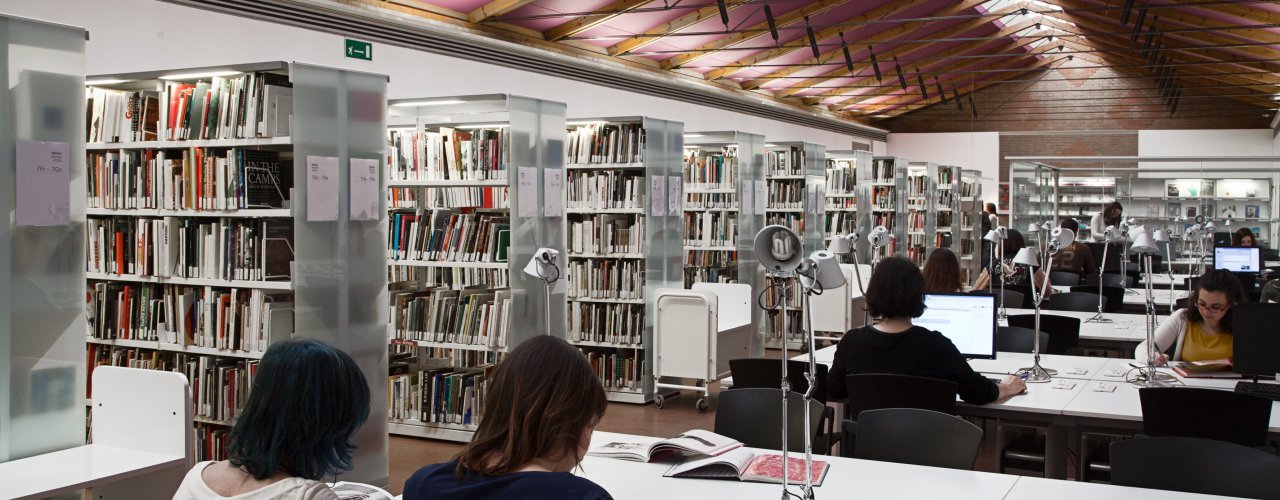
MACBA CED Biblioteca


This week I begin my current research residency with the Barcelona Museum of Contemporary Art Centre for Study and Documentation (MACBA CED). The residency will support my continued development of the idea of artistic «retraction» and the anachronistic writing of a tract or manifesto, entitled «Re/tract». I had a terrific experience 4+ years ago with the MACBA CED. What great support staff and resources!

EN

Peter Freund is usually working on something else. He writes to avoid making art and makes art to avoid writing. He is a sometimes curator so as to avoid his own work, but usually that inspires him to write or make art. Since 2019, through individual and collaborative projects, Peter has been developing the concept of artistic «retraction» (in contrast of «expanded» practices), which mixes the algorithmic impulse of oulipo and the reductive procedures of conceptual art. «Retraction» has provided a collaborative model of non-consensus and mutual constraint that led Freund to co-found the Barcelona-based art collective Adversorecto. Mobilizing the concept of retraction, he has worked with the Faculty of Visual Arts and Design at the University of Barcelona; Xcèntric CCCB; Found Footage Magazine; A-Desk; the Berlin-Brandenburgische Akademie der Wissenschaften; the Archive, Memory and Ethnography International Film Festival (Porto) and the Mudas Museum of Contemporary Art (Madeira). With his current residency at MACBA CED, Peter is doing research to support his writing of an art-theoretical tract, «Re/tract». 

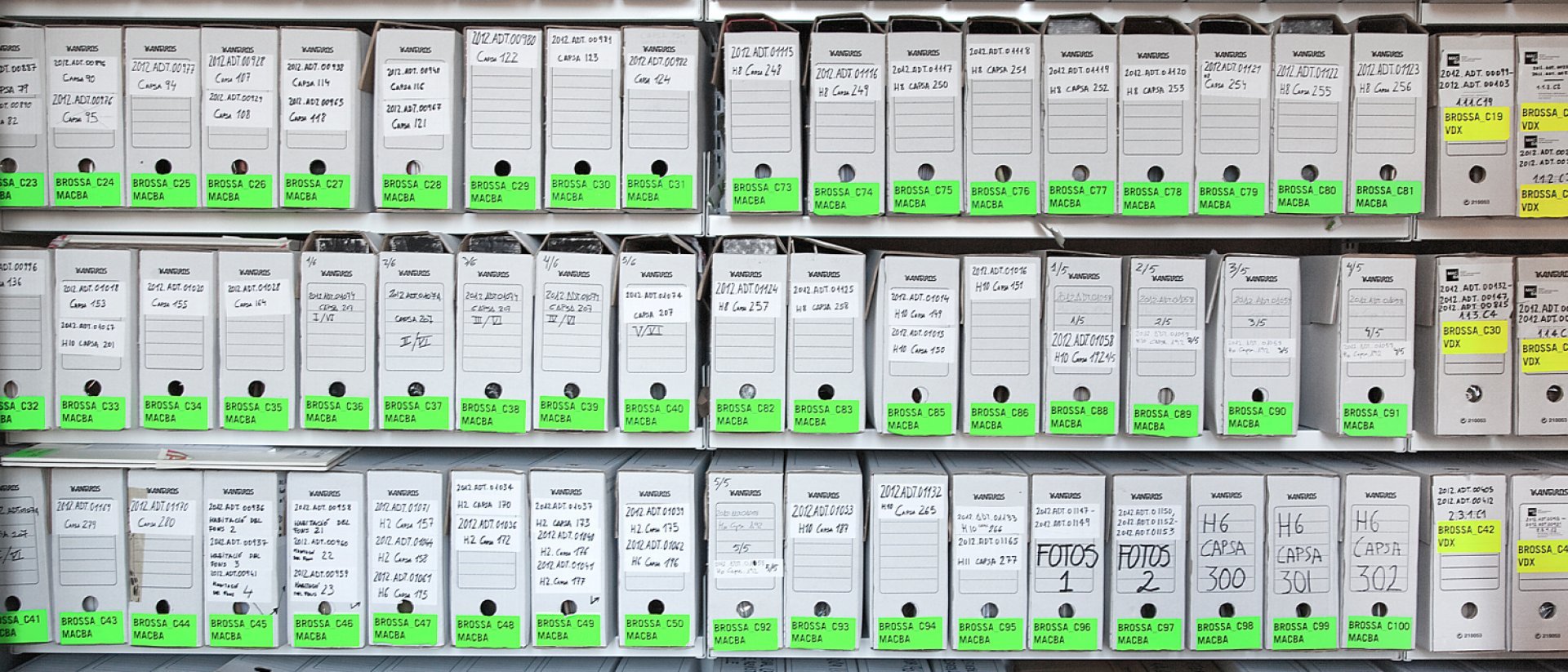
MACBA CED Archivo

ES

Peter Freund suele estar trabajando en otras cosas. Escribe para evitar hacer arte y hace arte para evitar escribir. A veces es comisario para evitar su propio trabajo, pero generalmente eso lo inspira a escribir o hacer arte. Desde 2019, a través de proyectos individuales y colaborativos, Peter ha estado desarrollando el concepto de «retracción» artística (en contraste con las prácticas «expandidas»), que mezcla el impulso algorítmico del oulipo y los procedimientos reductivos del arte conceptual. «Retraction» ha proporcionado un modelo colaborativo de no-consenso y restricción mutua que llevó a Freund a cofundar el colectivo de arte con sede en Barcelona Adversorecto. Movilizando el concepto de retracción, ha trabajado con la Facultad de Artes Visuales y Diseño de la Universidad de Barcelona; Xcèntric CCCB; Found Footage Magazine; A-Desk, Berlin-Brandenburgische Akademie der Wissenschaften; el Festival Internacional de Cine Archivo, Memoria y Etnografía (Oporto) y el Museo de Arte Contemporáneo Mudas (Madeira). Con su residencia actual en el MACBA CED, Peter está investigando para para apoyar su escritura de un tratado teórico-artístico, «Re/tract».


Index of matters [on objects and other phantasmagoria]: Vitor Magalhaes Exhibit at Mudas Museum of Contemporary Art


Main room of gallery space, Mudas Museum of Contemporary Art (Madeira, Portugal)


Portuguese artist Vitor Magalhães invited me to collaborate for his solo show «index of matters [on objects and other phantasmagoria]» at the gallery of the Mudas Museum of Contemporary Art in Madeira, Portugal. The exhibit opened the first week of December 2022 and runs through March 2023. The collaboration was an inspiring experience with many unexpected turns. Ultimately, I contributed a piece of fiction I wrote for an artist book designed by Vitor and presented as one of the works in the show. The experimental narrative, entitled «A Door that Doesn’t Close Properly», was developed over the course of several months in relation to elements in the exhibit and general conversations about concepts with Magalhães. A voice recording of the story was installed in one of the gallery rooms so that the sound would spill throughout the exhibit. The museum flew me and my family out for the opening, where Vitor and I enjoyed a public dialogue as part of the reception events. Despite last-minute date changes and a torrential rain storm, the exhibit opening had a nice turn-out, and the discussion during the public dialogue included some terrific exchanges. See video here:

«index of matters [on objects and other phantasmagoria]» (42:30)
(Vitor Magalhães and Peter Freund)

A separate collaborative show between the Barcelona-based Adversorecto collective and Vitor Magalhaes, «Adversorecto: Round One», is scheduled to open in late 2023 at the Mudas Museum of Contemporary Art gallery.


Crescendo Cantabile: Retracted Descriptions and Partitura (Score)


Partitura/Score image for Crescendo Cantabile: Retracted Descriptions
Image/assemblage by Werner Thöni (of Adversorecto)


An oulipo-inspired collaboration between artist/professor Eloi Puig and the Adversorecto collective began as a mutually-retractive dialogue between Puig and Peter Freund (of Adversorecto) focused on interrogating three aspects of textuality: descripción/description, página/page, and texto/text. The dialogue was carried out across Spanish and English to bring out ambiguities available between the two languages. When the dialogue was completed in written form, Werner Thöni (of Adversorecto) developed for selected fragments from the text a visual partitura/score. This visual image highlights those words that will be subjected to performative intervention. The next stage in the project will be for the three collaborators to decide on the concrete recitation to be applied at the highlighted points in the partitura/score. Finally, the performance of the work will be presented in a public venue, and the full retracted desciptions text will be published in the next book of the IN>TRA series of the Imarte artistic research group from the University of Barcelona Faculty of Fine Arts.

A more detailed description of the project is presented in the following pdf, which also includes the partitura/score and dialogue fragments. Crescendo Cantabile: Retracted Descriptions.


Family Film Project: International Film Festival on Archive, Memory, Ethnography (Porto, October 22 special session)

A bad rain storm notwithstanding, we had a quite decent turn-out for the masterclass followed by screening of the Retracted Cinema session at the 11th annual Family Film Project: International Film Festival on Archive, Memory, Ethnography. There was a lively and wide-ranging audience discussion after the screening. [Download/View: FFP 2022 Program pdf]

 
Embed Block
Add an embed URL or code. Learn more


Retracted Cinema in Oporto: CINEMA TRINDADE (22 October 2022)


Retracted Cinema (Redux)
October 22, 2022; 3:20
Cinema Trindade; Porto, Portugal

This one-hour program presents fifteen experimental shorts that focus on recontextualizing found or archival footage via algorithmic intervention. The works presented in the Retracted Cinema program use the appropriated film material itself as the site and means of auto-recontextualisation. Inspired by tendencies within conceptual art and Oulipo, the results are achieved by applying a set of rules or constraints (an algorithm) that governs a repeatable (iterative) array of transformations. In this way, the program forges a bridge linking the algorithmic impulses within the traditions of avant-garde cinema, literature, and visual art.

Filmmakers include: Gregg Biermann (Happy Again, 2006), Blanca Rego (Psycho 60/98, 2016), Albert Alcoz (Home Movie Holes, 2009), Keith Sanborn (Energy of Delusion, 2010-22), Vitor Magalhães (Naturalezas Mortas: Em Seis Movimentos, 2020), Gonzalo Egurza (17-17, 2017), Taller Estampa (¿Qué es lo que ves, YOLO9000?, 2017-18), Eugenio Tisselli (Media Trash, 2002), Eloi Puig (Torvix: Pate Risxas, 2020), Barbara Lattanzi (De-dramatization Engine, 2006), Peter Freund (Floating Point, 2020), and E.P. (1.618 Things I Know About Her, 2020). 

The program is presented as a special session within the 11th annual Family Film Project festival, Saturday, October 22, 2022 at 3:20 in Cinema Trindade, Oporto, Portugal. Masterclass by curator Peter Freund precedes screening at 2:30. 


Suñol Foundation Performance: Eloi Puig, Raquel Muñoz, & Peter Freund


I was invited to participate this Saturday as a performer in Eloi Puig’s Tilottama-Kptekan Alignment at the Barcelona Suñol Foundation. May 7th is the finissage and final day to visit the exhbit of IN> TRA exhibition. Artistic practice as a model of experience. The artists Eloi Puig, Raquel Muñoz and Peter Freund will do a performance in relation to Puig’s work, Tilottama-Kptekan Alignment (2018-2019), which is part of the exhibition.

For more information about the performance, please visit the Suñol Foundation website.


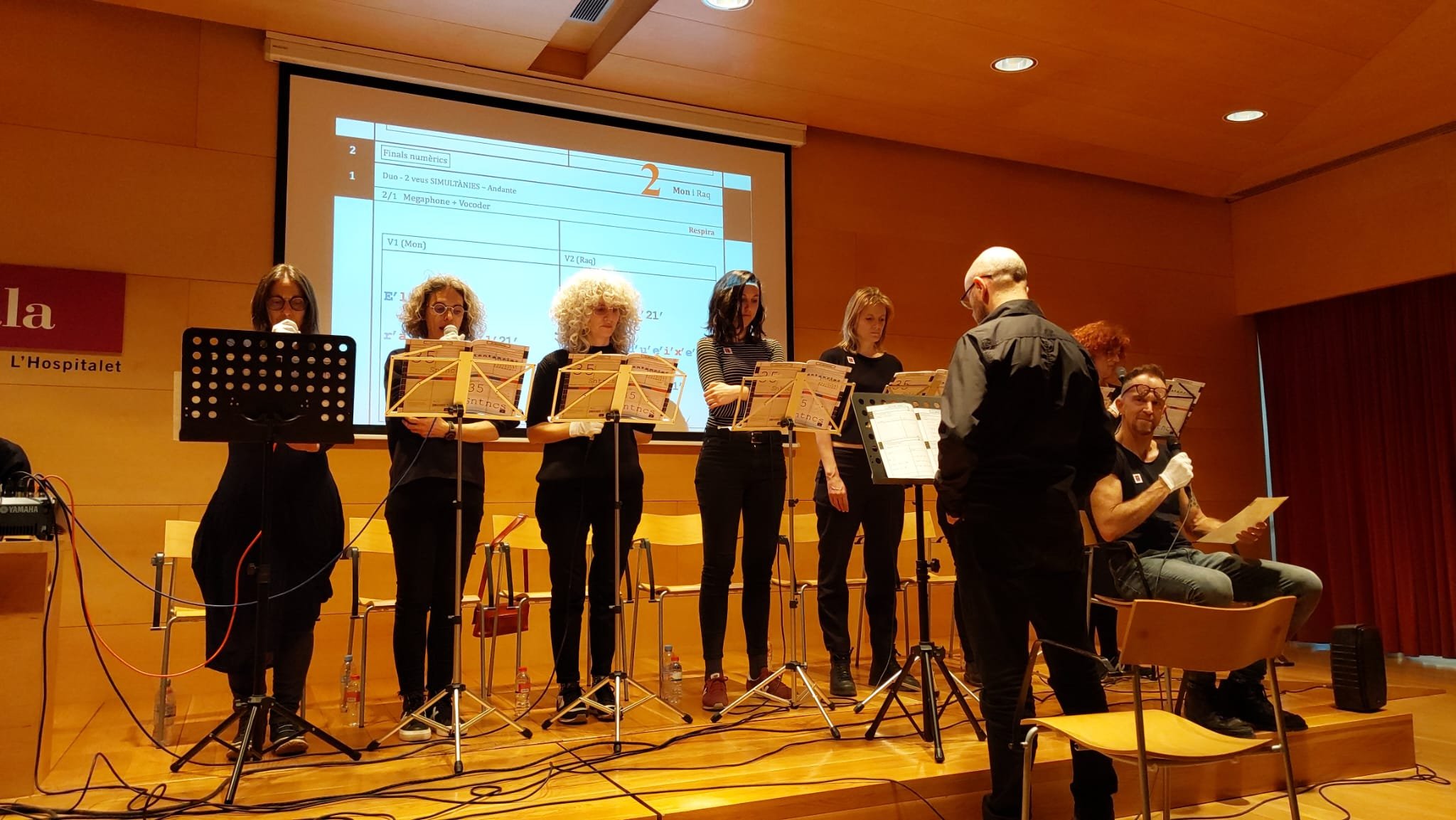
35 Sentences (After Sol LeWitt) - Declamatori Collective Performance


I participated as a guest performer in this Oulipo-inspired performative recitation of 35 Sentences at Tecla Sala Art Center (Llobregat, Barcelona) in early April 2022. Video of performance link.

ENG
The Declamatori collective, with Eugènia Agustí, Montse Carreño, Jo Milne, Laia Moretó, Raquel Muñoz, Cristina Pastó, Mercedes Pimiento, Eloi Puig and Martí Ruiz, is part of the IN>TRA2 research team and has written a score specific for the performative reading from the proposal of Antònia Vilà, curator of the exhibition, accompanied by artist's books on conceptual poetics, produced by the Tecla Sala Art Center in 2021. Guest performers: Peter Freund with Marc Anglès.

CAT
El col·lectiu Declamatori, amb Eugènia Agustí, Montse Carreño, Jo Milne, Laia Moretó, Raquel Muñoz, Cristina Pastó, Mercedes Pimiento, Eloi Puig i Martí Ruiz, forma part de l’equip de recerca IN>TRA2 i ha escrit una partitura específica per a la lectura de l’acció a partir de la proposta d’Antònia Vilà, comissària de l’exposició. El llibre com a present continu. Llibres d’artista al voltant de les poètiques conceptuals, produïda pel Centre d’Art Tecla Sala l’any 2021. Intèrprets convidats: Peter Freund amb Marc Anglès.


Martí Ruiz

Eloi Puig introducing the program with Eugènia Agustí (right); ensemble behind.

Eloi Puig introducing the ensemble.

Performance of 35 Sentences.

Adversorecto: New Installation: «Agony: You Can Go Whenever You Want»


Agony: You Can Go Whenever You Want (adversorecto, 2021)
[video documentation: Maellyn Macintosh]

The feeling of agony always starts with two points in a weird calculus of time. The first point plots the location at which you’re moving irreversibly forward, and the second where it will all finally come to an end. You face the first point as excessive, a surplus, “too much”; you look ahead to the second as a decisive void, a lack, a point of relief. A person falling from a skyscraper. Strangers falling in love.

But while you move facing forward, fall facing downward, you do so only by looking back in your imagination from a permanently blind future. You cannot definitively experience the end that releases you. The scene of agony resembles a mathematical asymptote: a limit that is infinitely approachable but unreachable. The free fall of agony in this way opens its paradoxical space of enjoyment.

«Agony: You Can Go Whenever You Want» was produced by two artists (Adversorecto: Peter Freund + Werner Thöni) both working between two stipulated points during a five-month period. In making the two main components of the piece – five translucent painted panels and two video/sound projections – the artists collaborated deliberately with minimal contact other than sharing the start and end dates, the physical dimensions, and the theme of agony for the project.

The resulting work is an installation intended for viewers to walk through and to step back, stroll around, and experience as an ensemble. 

Video documentation of installation

Still from video documentation of «Agony: You Can Go Whenever You Want» (adversorecto, 2021).

A thank you to Eloi Puig, Montse Lopez, Natalia (assistant) et al of the Department of Fine Arts, University of Barcelona, for inviting adversorecto to exhibit this project in their gallery.


Adversorecto: [L'Auca d'en Félix]


[L’Auca d’en Félix] librito


[L’Auca d’en Félix] presents an experimental librito (booklet) by Adversorecto Collective whose text reads in four different directions.

Text 1 [w]:

quiero tirarme al vacio y
sobrevivir dejar tiradas las zapatillas
deportivas en la puerta del balcon
¡a que se aireen!
soltar la bolsa amarilla y
dar el salto para luego
contemplar la trayectoria de vuelo
echado de espaldas sobre la
grava del patio vecino

Text 2 [p]:

>>
a person
{ }
falling
∞ + x
from a skyscraper
*

strangers
+++
falling
) (
in love

Presentation in ADD+ART 2021 Congress


I was happy to take part in the international ADD+ART Congress 2021, organized by the University of Barcelona, Faculty of Fine Arts. Three main areas of the Congress: Spaces + Devices; Decoding + Activation; and Art + Territory; plus a Hybrid section. A link to the video of the panel at which I presented, DECODING / ACTIVATION TALK 01, and to my presentation abstract: Performatic Code. For more info on the general program of the Congress: ADD+ART2021.


Article Published in Found Footage Magazine


The article on the «Retracted Cinema» program I curated came out this week in Found Footage Magazine. The magazine is available through select bookstores and libraries. Locally in Barcelona, the magazine is carried by the CCCB (Barcelona Centre for Contemporary Culture) Laie bookstore. Cesar Ustarroz (FFM editor) and his team put out a beautiful product, in the choice of design, content, and paper materials.

Contributing filmmakers: 17-17, Gonzalo Egurza, Argentina, 2017, 5:10, Home Movie Holes, Albert Alcoz, Spain, 2009, 3:00; Psycho 60/98, Blanca Rego, Spain, 2016, 6:30; Happy Again, Gregg Biermann, USA, 2006, 5:10; ¿Qué es lo que ves, YOLO9000?, Estampa, Spain, 3:00; Naturalezas muertas (en seis movimientos), Vitor Magalhães, Portugal, 2019-20, (2nd version), 8:39; Floating Point, Peter Freund, USA, 2020, 6:00; Optical De-dramatization Engine, Barbara Lattanzi, USA, 2015, 5:00; Torvix, Eloi Puig, Spain, 2011-Present, 5:00; Lost Footage, Kuku Sabzi, USA, 2020, 2:11.


Adversorecto proposal mailing: loading...


adv_mailing.jpeg
 

Adversorecto completes its first exhibition proposal «Adversorecto: Round One». Getting ready for the mailing to art venues and curators.

Adversorecto Exhibition Design


The adversorecto collective (est. Barcelona 2020) takes the next two steps in preparing our first exhibit proposal, «Adversorecto: Round One». A few photos of the preliminary and final models for the exhibition design. The show will include ten pieces – including a live performance piece, paintings, installations, video, and an artist book – which were produced by tampering conceptually and formally with duality, reversal, the binary, parallax, inversion, and other reductions of «two» to the flip sides of a «one».

(Models by Werner Thöni.)


Modeling: Phase 1

Entry_Above.jpg
 
TowardBack.jpg
TowardEntry.jpg
 
Werner taping down the layout to prepare next stage of modeling.

Werner taping down the layout to prepare next stage of modeling.

 
BirdsEye.jpg


Modeling: Phase 2

 
Werner adjusting model
 

Welcome…


Retraction Project Wrap


A*Desk compilation page with links to all five installments of the Retraction project. [click to enlarge]


The completed Retraction project, conceived initially almost nine months ago, has now been published in all five installments, quintuplets. Thanks go to Montse Badia (A*Desk, editor-in-chief) for the invitation to guest-edit the November issue and for her hard work in implementing this rather large and sometimes intricate project during challenging times. I’m thrilled that the vast majority of the artists and writers I sought out were interested in the idea and came through with works that are exciting and worthwhile in their own right and that also gave me as a terrific provocation for continuing to think through the idea of «retraction».

List of Contributors:

Dora Garcia
Werner Thöni
Alexandre Madureira
-
Gerard Freixes
Eugenio Tisselli
Cinthia Bodenhorst + Sara Coleman
-
Elena Kuroda
Agnès Thöni
Nuno Carvalho
Andreas Kaufmann
-
Marc Anglès
Estampa
Montse Carreño + Raquel Muñoz
-
Mireia c. Saladrigues
Carlos Miguel Sánchez
Vitor Magalhães
Eva Sòria
-
Peter Freund

Next steps (2021) will be to get the ok from the contributors to create an interactive pdf of the five installments in a modified design (first in English, later in Spanish and Catalan) and consider some additional manifestations of the project sprung from the retractive impulse.


Retraction 5: Copy/Right [A*Desk: Journal of Critical Thinking]


Header_Img_McS-768x384.jpg
 

The fifth and final installment of Retraction published this week, which I'm delighted to announce: Retraction 5: Copy/Right. This installment enters the fantasmatic realm of the copy, featuring the work of Mireia c. Saladrigues, Carlos Miguel Sánchez, Vitor Magalhães, y Eva Sòria, introduced by the fifth segment of a running text I wrote for the project.

An excerpt from the introduction:

«From this vantagepoint, the copy defies the self-possession of the image – or even the object – or, let’s take it one step further, even the subject. The copy thereby confronts the central question of property, not because the copy threatens to transgress the law but because the copy exactly embodies the law. We must shift here from a framework of reproduction to a framework of repetition. The image endeavors to cover over the hole that it simultaneously creates (e.g. the holes of reference, of ornament, of illustration) while its failure to do so compels it to repeat – that is, to copy itself again.[6] This intrinsic repetition in the law of the copy shows its entanglement in the dynamics of enjoyment (in the psychoanalytic sense), the way in which the satisfying character of the image gives way to a dissatisfaction that it cannot completely overcome. Precisely at the junctures of its repetition, the image breaks from the property of a particularist vision (points of view, expressions and styles, objets d’art, artistic oeuvres and movements, art markets and collections) and enters the universality of the copy’s self-subversive structure. Here we can risk a legitimate question with which we might stipulate the crux of retraction: The images and their technologies that pervade our world today, that never deliver on their promises, and that dispossess us of the stability of our longed-for identities, how could these repeating images, these “copy machines,” precisely in their failed ambitions, become the basis of a collective project within an emancipatory politics? How could a politics of assembly be formed not on the image of an aggregation and inclusion of marginalized elements but on the structural lack of the all-inclusive, the central hole in the whole, the not-all of every totality that instigates and keeps alive the movement of an emancipatory aim?

This final installment of Retraction presents four works. The first investigates the reality of the virtual presentation of the art exhibition using 360-degree video technology and considers the differences, losses, and gains advanced by the virtual on the real. The project traces the inside-out connective tissue between the virtual and the real as a surface, in which, like the möbius strip or the Klein bottle, one cannot simply orient oneself from the standpoint of orthodox spectator behavior. The second entry introduces a full-scale art foundation in a net art project that retracts and develops the fundamental pretenses of art exhibitions in internet platforms. The third entry presents an epigrammatic text inspired by two canonical works of experimental film in which the recording apparatus significantly expands the frame of view only then, paradoxically, to retract the vision of reality into a view that transcends cinematic viewership. The last entry, written by an attorney and art historian, surveys the history, complexity and contradictions of current copyright law and intellectual property rights in relation to art, suggesting the ways in which the legal system lags behind not only contemporary art practices but also the expressed intent of intellectual property law.»